Dealing with Unpleasant Carpet Smells in a Sydney Office
Service: Commercial Carpet Cleaning and Odour Treatment
Location: Sydney, NSW
Property type: Corporate office
Client: Confidential
The Complaint: The Office Smelled Different After the Weekend
The carpet looked reasonably clean. It was vacuumed regularly, and there were no obvious stains across the main working areas. Yet employees continued to notice an unpleasant smell inside the office.
The odour became more noticeable after the weekend and during humid weather. This made the problem difficult to understand because the carpet did not look particularly dirty.
The issue raised an important question: if the surface looked clean, where was the smell coming from?
This was not simply a matter of making the office smell pleasant for a few hours. The underlying cause needed to be investigated before choosing a treatment.
Why Vacuuming Had Not Solved the Problem
Vacuuming is an important part of routine carpet maintenance, but it mainly removes loose soil and debris that the equipment can reach.
A carpet can still contain residues from old spills, moisture-related contamination and fine particles below the visible surface. Depending on the source, these materials may contribute to an unpleasant smell even when the carpet looks acceptable.
Humidity and inadequate drying can also make an existing odour more noticeable. Applying an air freshener might temporarily change the smell in the room, but it does not necessarily remove the material responsible.
The team therefore needed to look beyond the carpet's appearance and assess the likely source of the odour.

Investigating the Source of the Smell
The assessment focused on the carpet's condition, possible moisture retention and the areas where contamination might have accumulated.
Several factors can contribute to this type of problem:
-
Residue from food or drink spills that were not fully removed.
-
Moisture retained within the carpet after a previous cleaning.
-
Fine dirt and organic material trapped within the fibres.
-
Heavy foot traffic carrying additional soil into the carpet.
-
Limited airflow that slows the drying process.
These are possible causes, not interchangeable explanations. The correct treatment depends on what the inspection actually reveals.
In this documented office case, the investigation identified moisture and accumulated contamination within the carpet as contributing factors. Routine vacuuming alone had not addressed the problem.
Choosing a Treatment Instead of Masking the Odour
Once the likely source had been identified, the cleaning approach needed to remove contamination rather than simply introduce a stronger fragrance.
1. Preparing the Carpet
Loose soil was addressed before deeper cleaning. This helps prevent surface debris from interfering with the next stages of treatment.
The carpet also needed to be assessed for its construction, condition and suitability for the proposed method.
2. Deep Cleaning the Affected Areas
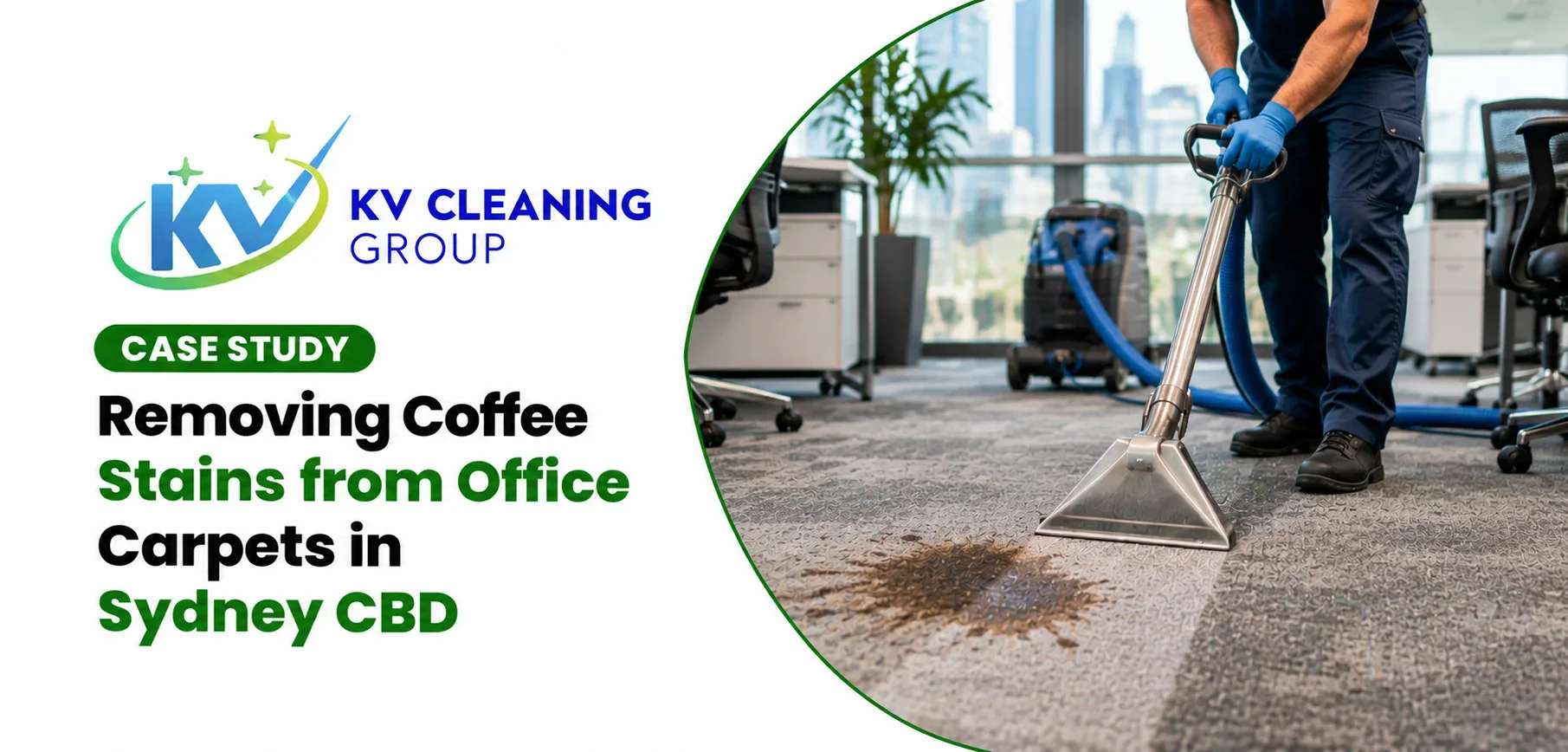
Professional hot water extraction was used as part of the cleaning process. This method introduces cleaning solution into the carpet and extracts it along with loosened soil and residue.
The amount of moisture and the extraction technique matter. Excess moisture left behind can extend drying time and contribute to further odour problems.
The appropriate process should always be selected according to the carpet and the condition of the site.
3. Treating the Remaining Odour
After cleaning, a suitable odour-control treatment was used to address the remaining smell.
Odour treatment should support source removal rather than replace it. If contamination remains below the carpet or in the underlay, surface deodorising alone may not resolve the issue.

4. Managing Drying Time
Drying was an important part of the work because moisture had been identified as a contributing factor.
Air movers were used to help improve airflow and speed up drying. The time required depends on the carpet, the amount of moisture, ventilation and the conditions inside the building.
The carpet should be checked before normal use resumes, particularly in areas where employees walk throughout the day.
What Happened After the Cleaning?
Following the cleaning and odour-treatment process, KV Office Cleaning reported that the unpleasant smell had been eliminated and employees noticed a fresher, more comfortable workplace. The published case study also states that the client extended its commercial cleaning agreement to include scheduled deep carpet maintenance.
The outcome illustrates why a persistent carpet smell should not automatically be treated as a fragrance problem. Where moisture or embedded contamination is involved, the cleaning process needs to address the source and allow the carpet to dry properly.
The Lesson for Office Managers
A carpet does not need to look heavily stained before it requires attention. Persistent odours can be an early sign that routine maintenance is not addressing everything within the carpet.
For office managers, a practical response involves three steps:
Investigate recurring smells. Note when the odour becomes noticeable, which areas are affected and whether there has been a spill, leak or previous cleaning treatment.
Choose the right cleaning method. The treatment should reflect the likely source of the odour, the carpet material and any moisture-related concerns.
Review the maintenance routine. High-traffic areas may need more frequent attention, while periodic deep cleaning can help address soil that routine vacuuming does not remove.
If a musty smell persists alongside signs of dampness or water damage, the moisture source should also be investigated. Carpet cleaning alone may not resolve an underlying building issue.
Commercial Carpet Cleaning Across Sydney
KV Office Cleaning provides commercial cleaning services for businesses across Sydney. If your office carpet looks clean but continues to smell unpleasant, an assessment can help determine whether the issue may involve embedded residue, moisture, previous cleaning or another source.
The appropriate treatment depends on the carpet's condition and the findings of the inspection.
Contact KV Office Cleaning
Phone: +61 485 961 400
Email: admin@kvcleaning.com.au
Discuss when the smell occurs, which areas are affected and whether the carpet has recently been wet or cleaned. These details can help identify the next steps.
Project Q&A & Key Details
Odours may come from old spills, embedded contamination, retained moisture or residues that routine vacuuming cannot remove. The source should be investigated before selecting a treatment.
Professional cleaning can help when the odour comes from removable contamination within the carpet. If the source is in the underlay, subfloor or building itself, additional investigation may be necessary.
Humidity and limited airflow can make existing odours more noticeable. Retained moisture may also contribute to the problem, so the carpet's condition and the surrounding environment should be checked.
n air freshener may temporarily mask an unpleasant smell, but it does not necessarily remove the source. Identifying and treating the underlying contamination is a more appropriate approach.
ddress spills promptly, follow suitable carpet maintenance practices, allow cleaned carpet to dry thoroughly and investigate recurring damp smells. If a leak or moisture problem is suspected, resolve that issue as well.